A four circuit protection valve splits air into four separate lines. Each line has its own protection.
The valve isolates a leaking circuit. Other circuits keep working, so you can still stop the truck.
Service brake circuits fill first. This gives you working brakes quickly after starting the truck.
Check the valve at every service. Look for slow pressure buildup or a hissing sound.
Replace the valve with the exact part number. A wrong valve may not protect your brakes.
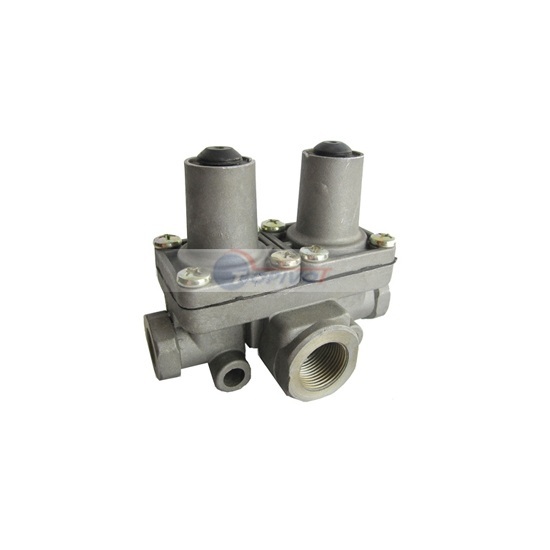
You will also see this component called a multi-circuit protection valve. Supply pressure comes from the air compressor, and the valve divides that supply among four outlets. Parts catalogs often list these units as four circuit protection valves, and the name describes the job well. Each outlet feeds its own reservoir, and the valve controls how air moves between them. The four circuit protection valve sits between the compressor and the tanks in the air brake system, so every downstream part sees protected air. The name tells you the count before you open the hood.
Inside the housing, each outlet carries a one-way venting element. Vaden Original describes these as internal check valves and diaphragms. They seal automatically when pressure in that branch drops. This behavior gives you the core benefit of a four circuit protection valve: a leaking line closes itself off instead of draining the supply. A four circuit protection valve also protects the four tanks. Air cannot flow backward from a healthy tank into a failed one. The valve body holds one diaphragm per outlet, and each diaphragm responds only to pressure in its own branch. Supply air enters a common gallery first. From there it passes through each check element on the way to the tank. A failed diaphragm stays closed, so the branch simply stops receiving air. Think of the primary circuit protection valve and the secondary circuit protection valve as two guarded doors on the same hallway. Each door shuts on its own. Most four circuit protection valves share this layout, and many circuit protection valves use pressure-limiting check valves to set the closing point.
The air brake system of a truck consists of several circuits, and each one needs its own protected branch. Vaden Original explains the design rule plainly: a single failure must never leave the vehicle without brakes. Every service branch has its own reservoir, and reservoirs connect only through the valve, in a controlled way. A leak in one branch cannot pull air from another. That rule shapes the circuits in the air brake system. You can trace this on any air brake diagram: four outlets, four tanks, four independent paths.
The table below shows what each branch feeds and what you lose when it fails.
|
Circuit |
What it feeds |
Reading if this circuit fails |
|---|---|---|
|
First service circuit |
Service brake chambers on one axle group |
Second service and park circuit hold; stopping distance increases |
|
Second service circuit |
Service brake chambers on the other axle group |
First service and park circuit hold; braking balance is upset |
|
Park and spring chamber circuit |
Hand brake valve, spring chambers, trailer control |
When pressure drops, spring chambers apply on their own |
|
Auxiliary consumer circuit |
Suspension, doors, clutch servo, power take-off |
Brake circuits are protected; only auxiliary functions are lost |
This split is why four isolated circuits matter so much. The front axle, the rear axle, the park and trailer supply, and the auxiliary consumers each draw from a protected branch. If one branch develops a leak, the four circuit protection valve isolates it. The remaining circuits keep enough pressure to stop the truck. You keep steering control and braking force on the healthy side. A four-way protection valve delivers exactly this result. Brake circuits stay independent for this reason. A leaking suspension bag will not drain the brake circuits on either axle. A four circuit protection valve holds that separation under load. A four-circuit protection valve keeps air brake circuits separate. A four-circuit protection valve also limits how fast air pressure rebuilds after a repair.
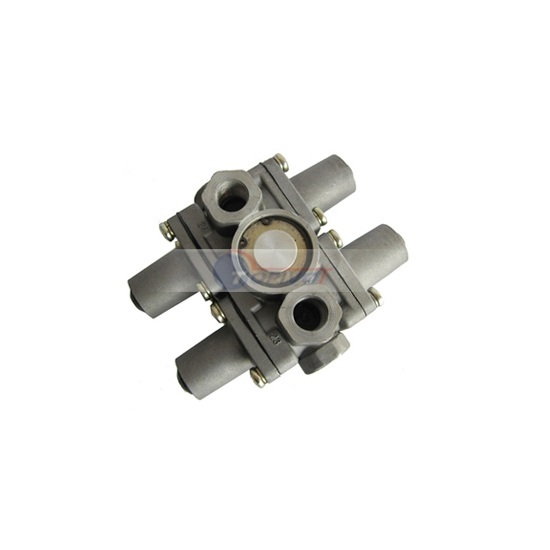
Normal operation follows a clear sequence. The compressor builds air and sends it to the supply port of the four circuit protection valve. The valve divides that incoming air into four or more independent lines, as Vaden Original describes. Each line charges its own reservoir until the system reaches its governed pressure. You can follow the split in order:
Rear axle service brake circuit
Front axle service brake circuit
Parking (emergency) brake and trailer supply circuit
Air suspension and accessories circuit (door, horn)
The valve gives pressure priority to circuits 1 and 2, according to Vaden Original. Those two lines serve the service brakes, so they fill first and hold their charge. Once the service circuits reach their set level, the valve opens the way for the parking and auxiliary branches. This order matters in the air brake system of a truck. A cold start after a long park leaves you with working service brakes before the suspension or horn receives air. The design does not fill one large tank. Vaden Original notes that a single shared tank would let a small hose burst disable every brake on the vehicle. Instead, the four circuit protection valve charges each reservoir through its own guarded path. You get a staged fill and a stable supply for every downstream component.
Failure behavior shows the real value of this part. Suppose a suspension air bellows bursts on circuit 4. The four-circuit protection valve senses the falling pressure in that branch and mechanically closes the line, Vaden Original explains. The remaining air stays in the tanks for the brakes. The other three circuits keep their charge and their function. You lose the suspension and accessories, yet you retain steering control and stopping power.
The same logic covers a leak in any individual compressed air circuit. The valve shuts only the affected branch. Intact circuits continue to work, so a sudden loss of air pressure in one line never becomes a total brake failure. This isolation is the heart of the protection scheme in multi-circuit air brake systems. The primary circuit protection valve and the secondary circuit protection valve each guard their own service line. Other circuit protection valves in the housing guard the park and auxiliary branches. Each unit responds only to its own branch, so one fault cannot cascade. Drivers of trucks with compressed air brake systems depend on this behavior every trip. A failed branch costs you a function, not the whole vehicle. That is the protection the valve delivers.
A dual foot valve regulates the primary and secondary circuits separately. Tectran's Dual Foot Valves use two separate supply and delivery circuits for service and secondary braking. The primary portion opens mechanically through the treadle, pedal, and plunger. If the primary supply fails, your foot opens the secondary inlet valve through the same linkage. This floor-mounted design suits dual circuit systems well.
A relay valve then takes over the rear brakes. Wikipedia describes it as an air-operated valve that remotely controls the brakes at the rear of a heavy truck or semi-trailer. Air travels slowly to the rear of a long vehicle, so the relay valve sits near the rear service brake chambers. The hose from the foot valve's delivery port becomes a control line. Only low-volume air signals travel that line. When you press the pedal, the relay valve opens its supply port and sends air from the remote supply straight to the rear chambers. The delivered pressure matches the control pressure from the foot valve.
The spring brake valve ties into the supply circuit through a set sequence. Air from the double check valve flows to the PP-1 valve, according to The Truckers Report. It then leaves the PP-1 and enters the SR-1 spring brake valve supply port. The air exits the delivery port and reaches the R-14 relay valve service port. That signal pressure depresses a piston in the R-14, and the R-14 opens a supply port. Air from the emergency line then flows into the spring brakes and releases them.
This chain shows why the four circuit protection valve matters. It feeds the supply that the trailer supply valve and spring brake valve depend on. A drop in air pressure on that branch would leave the spring brakes applied. The four circuit protection valve keeps that branch charged, so the protection holds across the whole service brake system. Check these truck air brake valves together during any inspection.
You can spot a failing four circuit protection valve before it strands a truck. Watch for slow pressure buildup at startup, a compressor that runs longer than usual, or a brake warning buzzer that stays on. A hiss near the valve body points to a leaking diaphragm. Uneven tank gauges tell you one circuit charges poorly. These signs deserve attention because the valve guards every downstream branch in the air brake system.
Build a simple check into your preventive maintenance schedule. Inspect the valve body, fittings, and lines at every major service interval, and drain the tanks to clear moisture. Then run a leak-down test: charge the system, shut the engine off, and watch the gauges. A steady drop on one gauge with the others holding steady suggests a fault in that branch. Spray soapy water on the valve and fittings to confirm the source. Check the trailer supply valve connection at the same time, since it shares the supply circuit. Replace any valve that leaks internally or fails to isolate a branch. Clean, dry air pressure keeps circuit protection valves working longest, so service the air dryer too.
Match the part number before you order. Cntopivot stocks reliable replacement units, including Four Circuit Protection Valve 934 700 040 0 and Four Circuit Protection Valve 934 702 302 0. Confirm the port layout and mounting pattern against your old unit. Verify the cracking pressure rating suits your truck's air brake system. A four-circuit protection valve with the wrong rating will not isolate a branch correctly.
Plan the swap for a low-demand window. Depressurize the system fully, label each line, and cap the ports to keep dirt out. Install the new four circuit protection valve with fresh seals, then recharge and leak-test every circuit. Record the part number and date in your service log. Keep a spare four circuit protection valve on the shelf for critical trucks. This habit protects uptime, and it protects your drivers. A four circuit protection valve is a small part with a large safety role, so treat replacement as planned maintenance, not emergency repair.
This valve isolates faults, preserves braking on intact circuits, and keeps the truck controllable after a pressure loss. Correct selection and maintenance of truck air brake valves, including the four circuit protection valve, protect fleet uptime and driver safety.
Add the valve to every air brake system inspection, alongside the other truck air brake valves. Check each circuit, then fit reliable replacements from Cntopivot, such as Four Circuit Protection Valve 934 700 040 0 and Four Circuit Protection Valve 934 702 302 0. Steady air pressure and sound protection pay back on every trip. Schedule that check now, and your brakes stay ready for the road ahead.
Check it at every major service interval, and drain the tanks each time. Run a leak-down test after any brake work. Regular checks catch a failing valve before it affects your protection on the road.
The valve closes only the affected branch. The other branches keep their charge and their function. You lose one function, not your brakes. This isolation is the core protection the valve provides.
No. Match the part number and the cracking pressure rating first. Cntopivot supplies Four Circuit Protection Valve 934 700 040 0 and Four Circuit Protection Valve 934 702 302 0. A mismatched unit will not isolate a branch correctly.
The valve gives priority to the two service branches. Those lines reach their set level before the parking and auxiliary branches open. You get working service brakes first on a cold start. This order supports safe pressure buildup.
It feeds the supply that the foot valve, relay valve, and spring brake valve depend on. Check these Truck Air Brake Valves together during inspection. A charged supply keeps the whole system working as designed.
Scan To Wechat